
EASLCE Webinar Spring 2015
May 21st at 7pm CEST
With Prof. Heather I. Sullivan
The Dark Pastoral
CONTEXT:

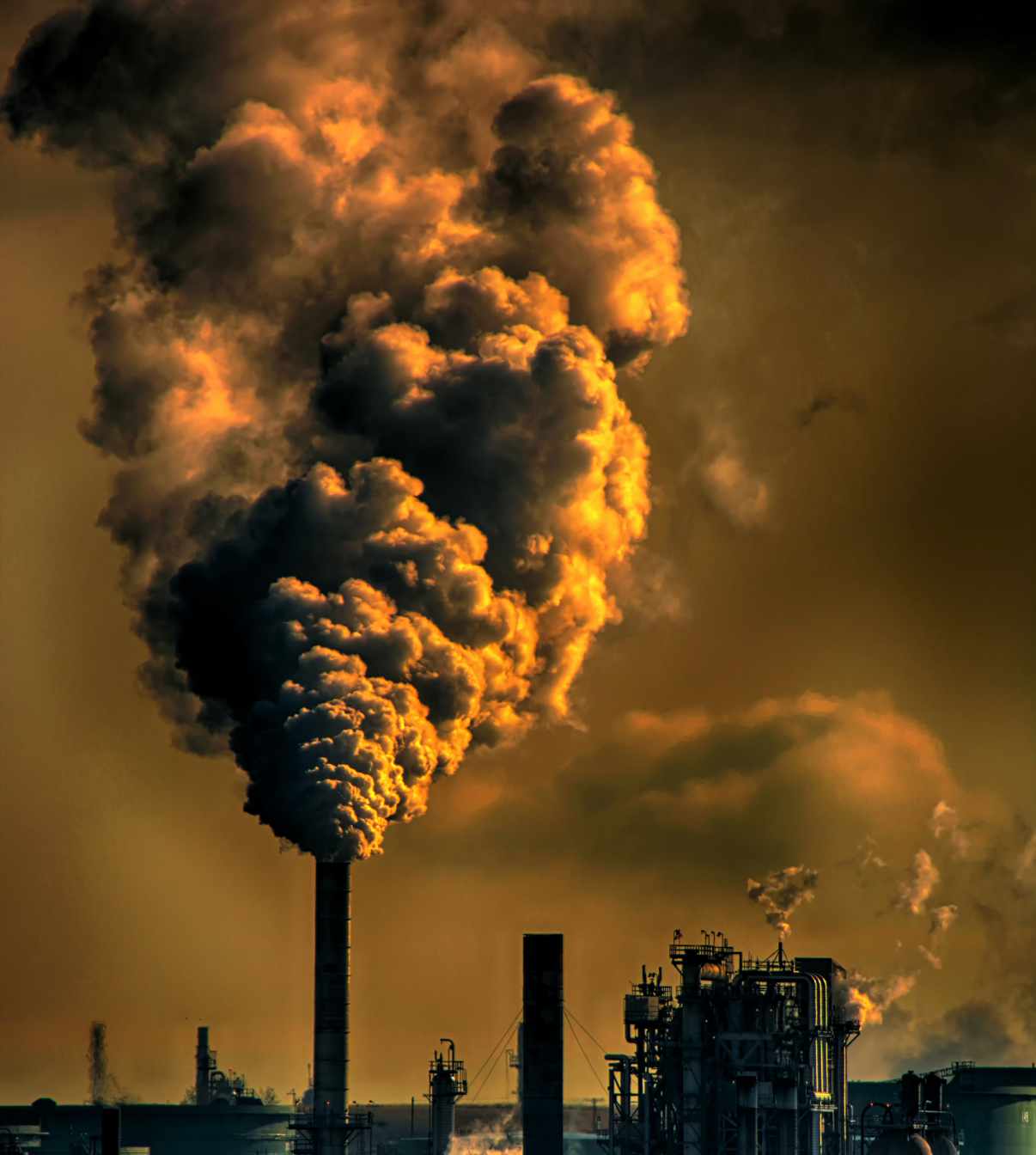
As a trope, the “dark pastoral” engages the controversy in ecocriticism and environmentalism about which cultural forms are most productive for re-imagining the human and non-human interactions in the Anthropocene during what appears to be the Earth’s sixth major extinction. Like other new forms of the pastoral such as Terry Gifford’s post-pastoral, the necropastoral in recent poetry, David Farrier’s toxic pastoral, Greg Garrard’s radical pastoral, and the urban pastoral, the dark pastoral evokes the traditional idyllic form’s possible alternative to our current petro-cultural consumer societies while attempting to avoid both sentimentalized views of static nature and also the naturalization of existing power structures. The dark pastoral, as I describe it in several recent essays (listed below), documents along with material ecocriticism how we are always in “nature”—as in the activities of matter—whether in the built environment or elsewhere. This is, however, the “new nature” of the Anthropocene, that is, a world in which every part of the planet’s surface contains traces, whether microscopic or massively structural, of anthropogenic activity. The seemingly bucolic agricultural or even wild spaces on Earth have also been re-shaped by industrial processes and the impact of burning fossil fuels. In our world fueled by oil, coal, and gas, the dark pastoral builds on material ecocriticism’s discussion of agentic and semiotic matter, and on Timothy Morton’s concept of “dark ecology.” The dark pastoral thus addresses the green biospheric “mesh” dripping with oil together with the long-term cultural insights and provocative tensions of the pastoral’s three-thousand-year traditions described in Ken Hiltner’s 2011 What Else is Pastoral: Renaissance Literature and the Environment? and Gifford’s Pastoral. In short, the dark pastoral highlights the double movement inherent in most all pastoral forms: in its often idealized green landscapes, the pastoral’s documentation of natural species and country life simultaneously portrays a looming sense of the seemingly distant city, crowds, politics, and power. The dark pastoral emerges from these tensions in the environmental humanities and our cultural practices and makes overt the material connections.
WEBINAR FOCUS:
This EASLCE Webinar will address the ecocritical debate regarding the pastoral as inevitably environmental or troublingly idealized and outdated, yet will focus primarily on the expanding options of the pastoral in ecocriticism such as the post-pastoral, the necro-pastoral, the toxic, radical, and urban pastoral, and the dark pastoral. Participants are invited to read a select set of essays with the following questions in mind:
QUESTIONS:
- What forms of pastoral are possible in the Anthropocene? Is it still a viable alternative to current cultural practices with its inherent critiques of power structures or have the terms changed too radically since the Industrial Revolution?
- I suggest the dark pastoral as a trope specifically for the Anthropocene, one that includes all kinds of landscapes and textual forms; consider the possible examples and whether the dark pastoral simply extends traditional pastoral critiques or if it might rather re-shape our ecological frame to include human beings in the material mesh.
- What position might be most productive for responding to global climate change and all the implications of the Anthropocene when entering into the ecocritical debate between, on the one side, Gifford’s “three kinds of pastoral” (traditional, any documentation of the countryside, and the derogatory) and Lawrence Buell’s assertion that environmentalism is inevitably pastoral, and on the other side, Greg Garrard’s, Ursula Heise’s and Dana Phillips’ critiques of the pastoral?
- What are the specific characteristics of the post-pastoral, urban, toxic, radical, and dark pastoral; where do they overlap? Is the proliferation of pastorals helpful or primarily versions of the same trajectory?
- How does rethinking the pastoral also involve questioning definitions of nature, ecology, the urban, and the human-non-human interactions?
- What insights to we gain by using material ecocriticism’s to reflect on the seemingly artificial and stylized forms of more traditionally pastoral texts? What happens when we explore non-traditional forms through the trope of the darkly material pastoral?
- Ken Hiltner notes that although pastoral literature of the Renaissance may appear to be primarily political critique instead of grappling with environmental issues, that is, the pastoral is often viewed as “a mode of veiled writing that conceals biting critiques of contemporary politics behind pleasant tales of shepherds and their flocks. If there is an essential opposition in Renaissance pastoral, in this view it is not between rural countryside and city, but rather between country and court, with the former serving as foil to reveal corruption at the latter. Focusing on politics, this approach unabashedly marginalizes the role of the environment.” Yet he claims that “early modern England was indeed in the throes of what can only be described as a “modern” environmental crisis, which engendered a number of contemporary debates, some of which address issues of environmental justice that informed (and were informed by) both canonical and noncanonical literature of the period.” We will consider this frame and seek to understand how older texts might also proffer insights for our current ecological circumstances.
REQUIRED READINGS:
- Heather I. Sullivan, “Dirty Traffic and the Dark Pastoral in the Anthropocene: Narrating Refugees, Radiation, Deforestation, and Melting Ice,” Literatur für Leser 14.2 (2014): 83-97.
- Heather I. Sullivan, “Nature and the “Dark Pastoral” in Goethe’s Werther” 2015 “Nature and the ‘Dark Pastoral’ in Goethe’s Werther,” forthcoming in Goethe Yearbook 22 (2015): 115-132.
- Terry Gifford, Pastoral. London, Routledge, 2010. (Chapter 1: “Three Kinds of Pastoral,” and Chapter 6: “The Post-Pastoral.”)
- Greg Garrard, “Pastoral” (chapter 3 of) Ecocriticism. London: Routledge, 2012.
- David Farrier, “Toxic Pastoral: Comic Failure and Ironic Nostalgia in Contemporary British Environmental Theater.” Journal of Ecocriticism 6.2 (2014): 1-15.
- Ken Hiltner, What Else is Pastoral: Renaissance Literature and the Environment. Ithaca: Cornell UP, 2011. (Introduction.)
- http://www.poetryfoundation.org/harriet/2014/04/what-is-the-necropastoral/