
ALL NEWS
-
Summary of the 14th EASLCE Webinar: Ecocritics Going Public
Scott Slovic opened the webinar with an introduction into the world of the public intellectual, a figure that is explored in depth in the writings we prepared for the webinar. Rather than letting ourselves be pushed to the side while scholars in the fields of economics, public policy, law and the natural sciences dominate public…
-
CFP: ECOCRITICISM AND OLD NORSE STUDIES
Fourth Workshop of the Ecocritical Network for Scandinavian Studies (ENSCAN) University of Agder, Kristiansand, Norway, 26-27 November 2020 Ecocriticism, that is, research on the relationship between literature, culture and environment, is a rapidly growing field. With some exceptions, the focus of ecocritical research so far has been on the present and the recent past. However,…
-
CFP: Ringing the Changes? Literary and Cultural Responses to the Anthropocene
CALL FOR PAPERS: Ringing the Changes? Literary and Cultural Responses to the Anthropocene Special panel at the annual conference of the Association for German Studies in Great Britain and Northern Ireland, Swansea University, 2-4 September, 2020. Deadline: 3 April, 2020 The environmental challenge to our collective existence is both more urgent, and more intractable, than…
-
EASLCE 14th Webinar: Ecocritics Going Public: Using Our Knowledge for Public Good
Scott Slovic, Professor of Environmental Humanities, University of Idaho, USA EASLCE Webinar Date and time: April 5th, 10am PST / 7pm CET Many students, teachers, and researchers have been drawn to the environmental humanities because of a desire to contribute, through academic work, to the well-being of society and the planet—but sometimes practitioners feel unprepared…
-
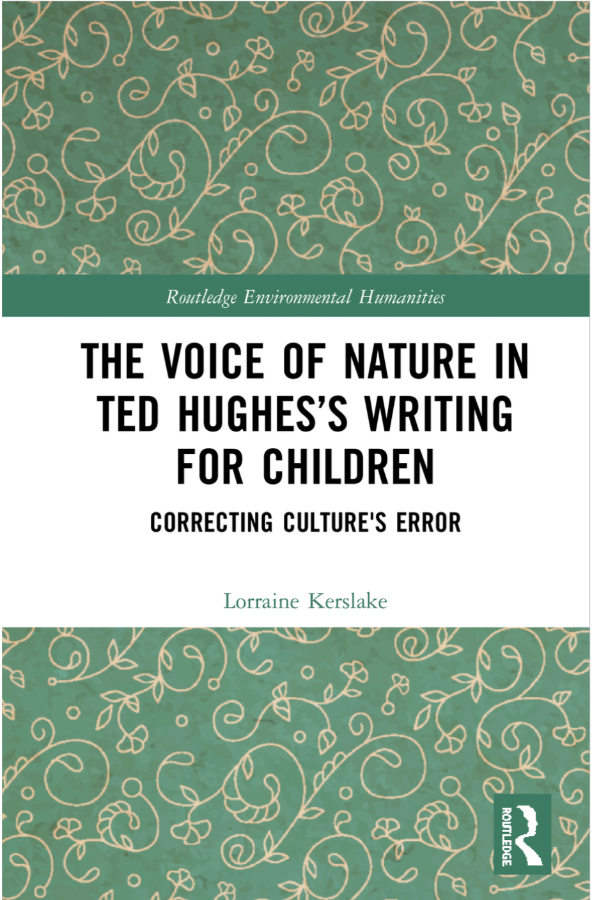
The Voice of Nature in Ted Hughes’s Writing for Children – Correcting Culture’s Error By Lorraine Kerslake
Despite the fame Ted Hughes’s poetry has achieved, there has been surprisingly little critical writing on his children’s literature. This book identifies the importance of Hughes’s children’s writing from an ecocritical perspective and argues that the healing function that Hughes ascribes to nature in his children’s literature is closely linked to the development of his…